Join our monthly newsletter where you will find interview advice, Prospect HQ updates, and more!
Share



How Do Student-Athletes Find Jobs After College?
The last whistle blows, you clean out your locker, and suddenly the calendar that ran your life for four years goes blank. If you are a former athlete staring at that blank space, you already know the question underneath it: what now? Finding jobs for student-athletes after college is less about starting from zero and more about translating a decade of training into language a hiring manager understands.
Student-athletes find jobs after college by naming the skills their sport built, targeting employers who value those skills, and using networks and platforms designed to surface culture fit rather than keyword matches. The athletes who move fastest treat the job search like a season: they scout, they prepare, and they show up ready.
At Prospect HQ, we built our platform around that exact transition, because we watched too many talented athletes get filtered out by résumé software that had no idea what a captaincy or a 5 a.m. lift actually signals.
Why do employers want to hire former student-athletes?
Because the traits that win games and matches tend to win at work too. And the data backs it up.
Current and former student-athletes bring more than athletic experience. They have resilience, coachability, accountability, teamwork, and the ability to lead under pressure, all attributes that consistently translate into workplace success. Those are the qualities we see employers respond to first, and they are exactly what a résumé built for keyword matching tends to hide.
Revelio Labs analyzed the career paths of former college athletes and found they experience faster salary and seniority growth in the five years after graduation than their non-athlete peers, driven largely by stronger management and communication skills. A separate look at long-run outcomes reported by Fortune found former athletes tend to out-earn non-athletes by roughly $220,000 over a career. Harvard Business School's research on the same question landed in a similar place: being a team player is a repeatable predictor of business success.
Employers are also telling us what they want. The National Association of Colleges and Employers found that team building tops the list of attributes employers look for in new graduates, followed closely by communication and leadership. Read a student-athlete's typical week whether they’re in-season or not, and those three are already there: shared goals under a coach, constant feedback, and the pressure of a scoreboard.
What jobs are student-athletes actually a fit for?
Far more than the usual assumptions suggest. Our own student-athlete ambassadors are on track for engineering positions, pre-med and medical sales, marketing, and plenty more. We’re not trying to pigeonhole anyone, and neither should your job search.
That said, the traits sport builds do carry weight in a few directions worth knowing about. Revelio's data shows former athletes are more likely than peers to start careers in sales, and it makes sense: sales rewards resilience, goal-tracking, and the ability to hear "no" and reset. More broadly, athletes tend to do well in roles that reward discipline and teamwork, including:
- Sales and business development, where competitiveness and follow-through drive results
- Operations and project management, which reward planning, accountability, and calm under deadline pressure
- Coaching, athletics administration, and sports business, where lived experience is a credential
- Client-facing and account management roles, which lean on communication and reliability
- Leadership development and rotational programs, which many employers design for high-potential grads
None of this means you are boxed into a "type." Athletes become engineers, teachers, analysts, and founders. The point is to start where your evidence is strongest, then expand.
If you want a fuller inventory of what you already bring, our breakdown of the career readiness skills student-athletes already have is a good place to map your own experience.
How do you turn athletic experience into a résumé employers read?
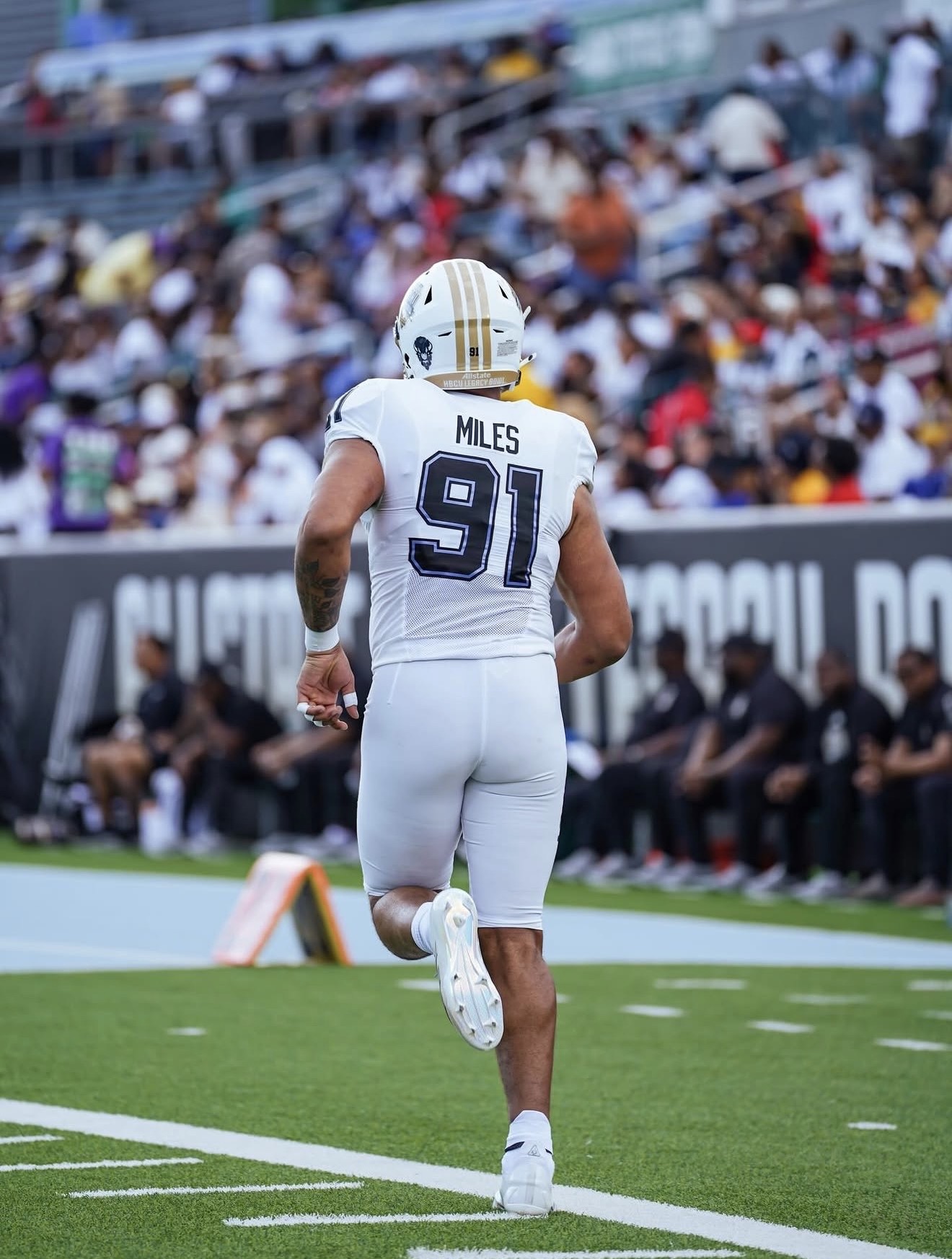
Translate accomplishments into outcomes, and put the skill next to the story.
A recruiter spends about 20 seconds on a first pass, so every line has to earn its place. Instead of listing "Division II soccer, four years," show what the role required and what it produced. "Balanced 20 hours of weekly training with a full course load while starting 40 games" tells a hiring manager about time management, durability, and commitment without you having to name any of them.
A few principles that hold up:
- Lead with results and numbers. Hours trained, teammates led, records held, GPA maintained.
- Name the transferable skill once, then prove it with a specific example.
- Cut sports jargon a non-athlete would not follow.
- Treat captaincy, team council, or mentoring roles as leadership experience, because that is what they are.
We go deeper on the exact wording in how to put your athletic experience on a résumé, including phrasing that survives applicant tracking software.
Where should student-athletes look for jobs after college?
Start with your built-in network
Coaches, teammates, alumni, boosters, and academic advisors form a web most athletes underuse. Alumni who played your sport tend to answer athletes who reach out, because they remember the transition. A warm introduction routinely beats a cold application.
Athlete-focused platforms like Prospect HQ
General job boards were built for keyword matching, which is exactly where athletic experience gets lost. Platforms built for this transition read your background as an asset. That’s why we built Prospect HQ. We work with companies across many different industries that want to hire current and former student-athletes. When you fill out your résumé and personal insights questionnaire on your Prospect HQ profile, you become more visible to those employers, so the fit finds you as much as you find it. Creating a profile is free, and you can get started on our platform.
Campus career resources
Your athletic department and career center often have employer relationships specific to athletes. Many schools now run programming built around exactly this handoff from sport to career.
Targeted applications
When you do apply cold, apply narrowly. Ten thoughtful applications to companies whose culture matches yours will outperform a hundred generic ones. Our guide on showing a company you actually want to work there covers how to stand out once you are in the pipeline.
When should you start your job search as a student-athlete?

If you’re in a fall sport, the best way to get started is to begin with your network. Reach out and connect with two people a week. That way you’re building up a funnel of opportunities to follow-up with in the Spring.
We completely understand how it feels to just focus on your sport, work through your eligibility, then tackle what’s next after that. The problem is that hiring cycles don’t wait for your season. Many rotational programs and entry-level roles recruit six to nine months ahead, so the athlete who starts scouting in the fall is applying while teammates are still deciding whether to begin.
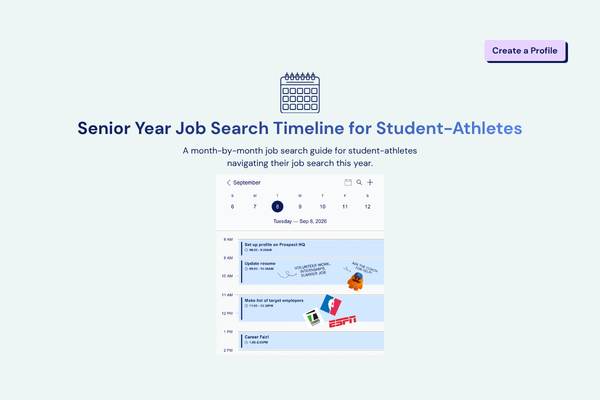
Working backward from graduation helps. Fall is for building your profile, résumé, and target list. Winter is for outreach and interviews. Spring is for closing. Our spring job search calendar for student-athletes lays this out week by week so the search fits around practice and travel instead of competing with it. If you still have eligibility left, an in-season internship is one of the strongest bridges available, and we cover how to find one in student-athlete internships around your season.
How do student-athletes interview well?
By treating the interview like film study: prepare, anticipate, and answer with specifics.
You have already done the hard version of this: walking into rival arenas and playing your best game. The skill that translates is preparation, knowing the opponent, having a plan, and adjusting in real time.
Build three or four stories from your athletic career that each demonstrate a workplace trait. A comeback win shows composure under pressure. A season-ending injury shows resilience and adapting to your role. A conflict with a teammate shows you can navigate hard conversations. Practice them out loud until they sound like you.
For a full walkthrough tailored to athletes, preparing for a job interview as a student-athlete breaks down the questions you will actually hear and how to frame your answers.
What makes the athlete-to-career transition hard, and how do you get past it?
The hardest parts are identity and translation, and both get easier with a plan.
For years, "athlete" was the answer to who you are. Retiring from your sport can feel like losing a piece of yourself, and we know what that’s like. So, you’re in good company here. All the skills and attributes you’ve gained throughout your athletic experience will carry on into your next steps.
Employers don’t always see, on their own, how a track schedule maps to project management. That is on us as a field to fix, and it is also something you can get ahead of by learning the language of your target industry.
Your next season starts now with Prospect HQ

You spent years learning how to prepare, compete, and recover. Finding jobs for student-athletes after college uses the same process. Scout your options, translate your experience into language employers read, start earlier than feels natural, and lean on the people and platforms built to see what you bring.
That is the part we care most about at Prospect HQ. Our whole reason for existing is to make sure athletes get matched to employers for the right reasons, on skills, attributes, and culture together, instead of getting filtered out by ATS software that never played the game. Create your free profile and put your next opportunity in motion.
Frequently asked questions
What are the best jobs for student-athletes after college?
There is no single answer, and that is the point. Our own student-athlete ambassadors are headed toward a number of different industries including: mechanical engineering, pre-med, medical sales, and marketing, among other fields. Sales, business development, operations, and project management tend to be strong early fits because they reward the competitiveness, discipline, and teamwork athletes already have, and Revelio Labs found former athletes are especially likely to start in sales. Start where your evidence is strongest, then expand.
Do employers actually prefer hiring former student-athletes?
The employers we work with do, and that is exactly why they are on Prospect HQ. They come to us because they want what a varsity background signals: a candidate who is coachable, accountable, and steady when the pressure is on. Those traits are hard to screen for in a typical interview, so a proven athletic track record does a lot of the work up front. The attributes hiring teams rank highest, teamwork, communication, and leadership, are exactly the ones sport builds.
How do I put my sport on my résumé without sounding like I only played a game?
Translate it into outcomes. A recruiter wants to see that an athlete balanced 20 training hours against a full course load, led a unit, or held a record, and then wants the skill each one proves spelled out plainly. Cut the jargon an outsider would have to look up, and file captaincy or mentoring under leadership, because that is how a hiring team will read it anyway.
When should student-athletes start looking for jobs?
Recruiters fill entry-level and rotational program seats six to nine months out, so by the time a final season wraps, the strongest roles are often spoken for. Athletes who start scouting in the fall land in the pipeline while their peers are still deciding to begin.
Can I find a job if I still have eligibility or am playing in-season?
Yes. In-season internships are one of the best bridges into full-time work, and platforms built for athletes let you search around your schedule. The key is to build your profile and target list before your season peaks so outreach fits into the gaps.
How do I explain my sport to employers in an interview?
Focus on translation, not play-by-play. Most hiring managers won't follow your stat line or know what your position demands, but every one of them understands discipline, resilience, and accountability. Pick two or three specific moments — the 5 a.m. lifts before class, the season you competed hurt, the hard conversation you had with a teammate — and tie each one straight to the role you want. Saying "I balanced 20 hours of training a week with a full course load and still made the dean's list" tells a manager exactly how you'll handle a heavy deadline. Name the attribute first, then let the sport prove it. At Prospect HQ, we match athletes to employers on exactly these attributes and culture fit, so before you walk in, practice saying out loud what your sport actually taught you and where it shows up at work.
.png)
.png)