Join our monthly newsletter where you will find interview advice, Prospect HQ updates, and more!
Share



The Career Readiness Skills Student-Athletes Already Have

Ask a hiring manager what they want in an entry-level hire, and you will hear a familiar list: works well with others, shows up prepared, handles pressure, learns fast. Ask a former point guard or a retired distance runner to describe a normal Tuesday from their college years, and you will hear that same list back, just in a different vocabulary. The career readiness skills employers spend fortunes trying to teach are the ones student-athletes have been practicing since they were old enough to make a roster.
The National Association of Colleges and Employers (NACE) defines eight career readiness competencies that broadly prepare college graduates for the workplace. Read through them with an athlete in mind and the connection is hard to miss. The harder question, and the one that actually decides whether a hire works out, is whether the athlete and the company are a real culture match. That is the part most job boards ignore, and it is the part we built Prospect HQ to solve.
What are the NACE career readiness skills?
NACE launched its Career Readiness Initiative in 2015 to give students, schools, and employers a shared language for what it takes to launch a career. The result is a set of eight competencies, each backed by sample behaviors that employers can actually observe and assess. They are:
- Career and Self-Development: pursuing growth, seeking feedback, and building a professional network.
- Communication: exchanging information and ideas clearly with people inside and outside an organization.
- Critical Thinking: reading a situation, analyzing information, and making sound decisions.
- Equity and Inclusion: engaging respectfully across cultures and backgrounds.
- Leadership: using personal and team strengths to reach shared goals.
- Professionalism: dependable work habits, accountability, and attention to detail.
- Teamwork: building collaborative relationships and managing conflict toward a common goal.
- Technology: using tools ethically to work more efficiently and adapt to change.
If you have ever competed at the college level, you probably felt a flash of recognition reading that list. You did not learn those things from a textbook. You learned them at 5 a.m. lifts, in film sessions, in the locker room after a tough loss, and in the quiet discipline of showing up when no one was watching.
Why do student-athletes already have these skills?
Sports is one of the few experiences that forces all eight competencies at once, for years, under real consequences. A missed assignment in a class might cost you a grade. A missed block in a game costs your teammate. That stakes-and-repetition combination is exactly what builds durable skill.
Here is how the eight NACE competencies tend to map onto an athlete's everyday experience.
NACE competencies and what it looks like in sports
Career and Self-Development
Watching film of your own performance, taking coaching, and setting measurable goals for the next season.
Communication
Calling plays, reading body language on the field, and giving and taking direct feedback under pressure.
Critical Thinking
Adjusting strategy mid-game when the original plan stops working.
Equity and Inclusion
Building trust across a locker room of teammates from different cultures, backgrounds, and hometowns.
Leadership
Captaining a unit, mentoring younger players, and setting the standard at practice.
Professionalism
Showing up early, hitting weight and conditioning targets, and being accountable to a team that depends on you.
Teamwork
Sacrificing personal stats for a win and managing conflict with teammates you cannot avoid.
Technology
Using performance trackers, video systems, and analytics to improve your performance.
The research backs up what the table suggests. A Gallup study found that former student-athletes were more likely to be engaged at work than their non-athlete peers, with female athletes reporting the highest engagement of any group, at 48 percent. At the top of the org chart, a study by EY and espnW found that 94 percent of women in C-suite roles had played sports, and 52 percent competed at the university level (EY). These are not coincidences. They are the long-run payoff of a skill set built over years of competition.
If athletes have the skills, why is the job search still hard?
Because skills are only one part of the equation. Attributes and culture are what complete it. Who someone is, how they lead, what drives them, and the environment they do it in matter just as much as what they can do. Most hiring tools measure one of those things. The right fit, for the right reasons, comes from looking at all three together.
think about a top defenseman playing out of position at left wing. The game doesn't suit their strengths. Move them back to the blue line, and they thrive. People in the right work environment operate the same way. You can have every competency on the NACE list and still struggle at a company whose values, pace, or expectations clash with how you operate. Plenty of capable people quit jobs they were perfectly qualified for, not because they could not do the work, but because the environment was wrong for them.
This is where most hiring breaks down. Resumes are good at listing what someone has done. They are bad at showing who someone is, how they lead, what motivates them, and where they will thrive. A bullet point that reads "four-year varsity athlete" tells an employer almost nothing about whether that person fits their team. So great candidates get filtered out by keyword scans, and employers keep making expensive hiring mistakes, with the cost of a bad hire often running into tens of thousands of dollars once you count lost productivity and the search to replace them.
The fix is not more buzzwords on a resume. It is matching who people actually are.
How does culture fit change the hiring equation?
Culture fit works in both directions, and that is the point a lot of advice misses. It is not only about whether a candidate is right for a company. It is also about whether a company is right for a candidate.
For student-athletes, that means looking past the title and the salary to ask the questions that actually predict whether you will be happy and successful: Does this team value the things I value? Will I be coached and developed, or left to figure it out alone? Is the pace and intensity here something I will thrive in or burn out from? You already know how much your environment shaped your performance as an athlete. The same is true at work.
.jpg)
For employers, fit is what turns a strong resume into a strong hire who stays. When companies understand cultural alignment early, they see better retention and better performance, because the person and the team actually click. Hiring an athlete for their teamwork and resilience only pays off if the team they join is one where those traits can show.
At Prospect HQ, this is the whole model. We surface roles based on who you are, not just what your resume says, so the matches you see are with employers who value the way you work. Instead of firing applications into the void, and never hearing back, you send a short video introduction to a hiring manager and let your personality and drive do what a resume cannot. Employers, in turn, get to understand a candidate's character and fit before the first interview, which is exactly what reduces costly mismatches.
How can student-athletes show career readiness skills to employers?
Having the skills is one thing. Proving them is another. A few ways to make your career readiness obvious to the people doing the hiring:
- Translate, don't list. Don’t just say you were a team captain. Say you led a 30-person roster through a coaching change and kept the group focused enough to finish the season strong. Specifics show critical thinking and leadership at the same time.
- Use the employer's language. When you describe your experience, borrow the words from the NACE competencies and the job description. "Managed conflict on a high-pressure team" lands harder than "good teammate."
- Show, don't tell, with video. A 60-second introduction lets a hiring manager hear your communication skills and sense your professionalism in a way no document can.
- Talk about fit on purpose. In interviews, ask about how the team works, how feedback happens, and what success looks like in the first year. It signals self-awareness, and it helps you screen for the right culture too.
- Build your network before you need it. Career and self-development includes relationships. A community of athletes, mentors, and employers who understand your background is a head start most job seekers never get.
That last point is worth sitting with. The transition out of sports can feel isolating, and a lot of athletes go through it without anyone who gets both the grind of competition and the uncertainty of what comes next. Having people in your corner who understand both is a part of being career ready.
Student-athletes already have what employers want
You spent years building the exact career readiness skills employers say they want most: teamwork, communication, leadership, resilience, and the discipline to keep showing up. The data shows that work pays off in engagement, in advancement, and in long-term career success. What you need now is not a crash course in soft skills you already have. You need a way to find the employers who will actually value them, and a way to show those employers who you are beyond a page of bullet points.
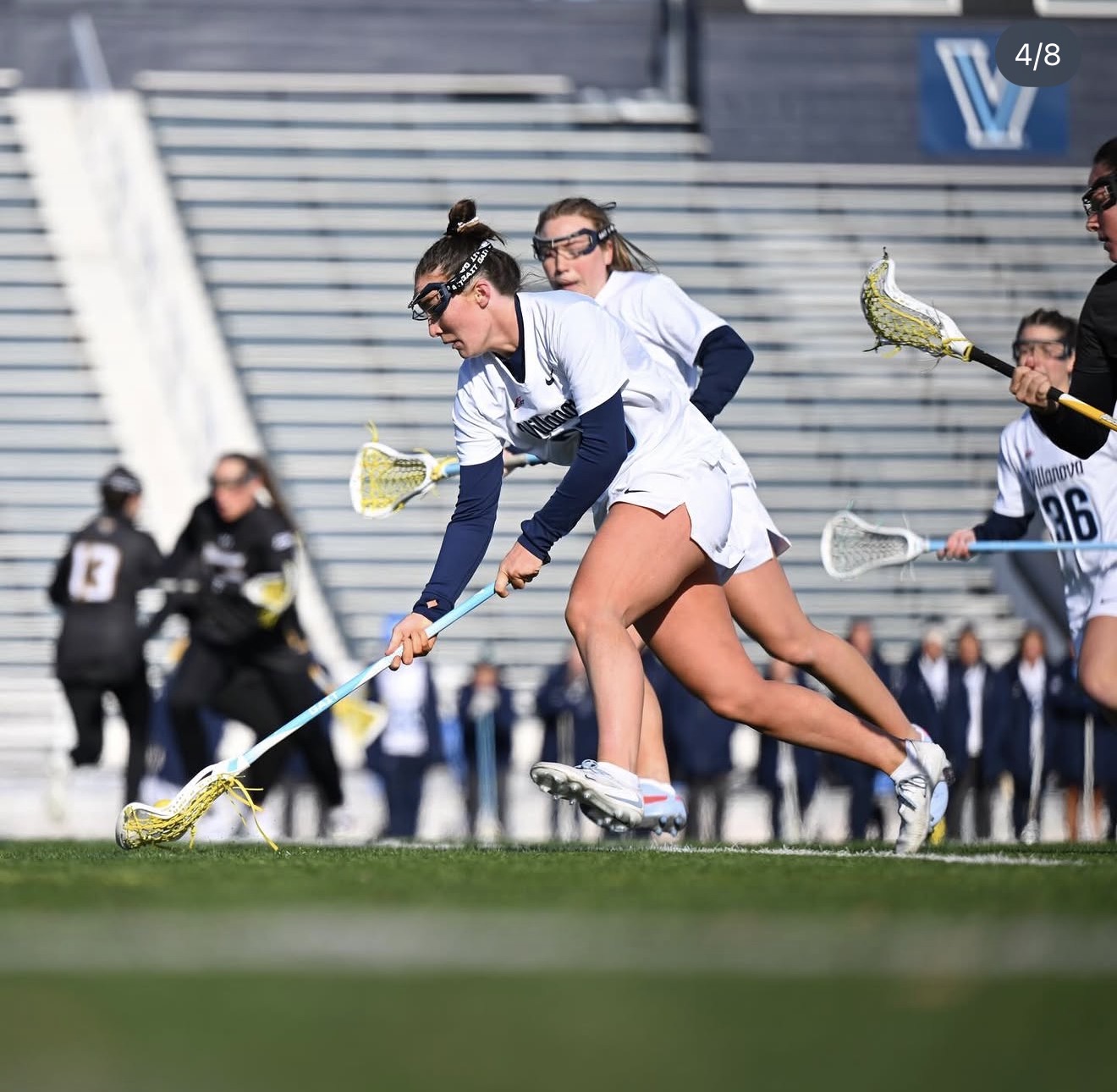
That is the work we care about: matching purpose-driven candidates with culture-conscious employers so both sides win. If you are a current or former student-athlete figuring out your next chapter, see how Prospect HQ works for athletes and create your profile. The skills are already yours. Let's find the right place to use them.
Frequently Asked Questions
What are the 8 career readiness competencies?
NACE defines eight career readiness competencies: Career and Self-Development, Communication, Critical Thinking, Equity and Inclusion, Leadership, Professionalism, Teamwork, and Technology. Each comes with sample behaviors employers can observe and assess.
Do student-athletes really make better employees?
Research suggests they often bring strong workplace traits. A Gallup study found former student-athletes were more engaged at work than non-athletes, and an EY and espnW study found 94 percent of women C-suite executives had a sports background. Skills still need to meet the right environment, which is why culture fit matters as much as the resume.
What skills do student-athletes have that employers want?
Teamwork, communication, leadership, time management, resilience, accountability, and the ability to perform under pressure. These line up closely with the NACE career readiness competencies, because competitive sports forces athletes to practice all of them at once over many years.
How do I put my athletic experience on a resume?
Translate your experience into outcomes and skills rather than listing your sport. Describe what you led, what you managed, and what you achieved, using language that matches the NACE competencies and the job description. Then back it up in interviews or a video introduction that shows your communication and character.
Why does culture fit matter as much as skills in a job search?
Skills only pay off in the right environment. A qualified hire in the wrong culture often disengages or leaves, which is costly for everyone. Matching on values, work style, and expectations helps candidates thrive and helps employers retain the people they hire. Prospect HQ is built to match on that fit from the start.
.png)
.png)