

Join our monthly newsletter where you will find interview advice, Prospect HQ updates, and more!
Share



How to Put Your Athletic Experience on a Resume
You spent four years showing up before sunrise, competing when it counted, and holding a locker room together. Now a recruiter wants all of it on one page, and somehow it keeps coming out as a single flat line under “Activities.” If you have sat there wondering how to put your athletic experience on a resume without it reading like a hobby, you are not the only one.
We hear this from student-athletes every week at Prospect HQ. Most of them are not sweating the interview or even the job hunt. They get stuck on the blank space where their sport is supposed to go, because four years of work does not become resume language on its own. It does translate, and pretty well, once you stop describing your sport and start describing what it made you good at.
To put athletic experience on a resume, present it as experience that produced skills and results, rather than proof that you played. Give it a clearly labeled section like “Athletics & Leadership,” or fold it into your work history if the role read like a job. Lead each line with an action verb, put a number on the commitment, whether that is hours per week, roster size, years competed, or awards, and translate the experience into the skills employers actually screen for: leadership, time management, teamwork, accountability, and performing under pressure. Do not tell an employer you were an athlete. Show them what being one required you to do.
Why does your athletic experience belong on your resume?
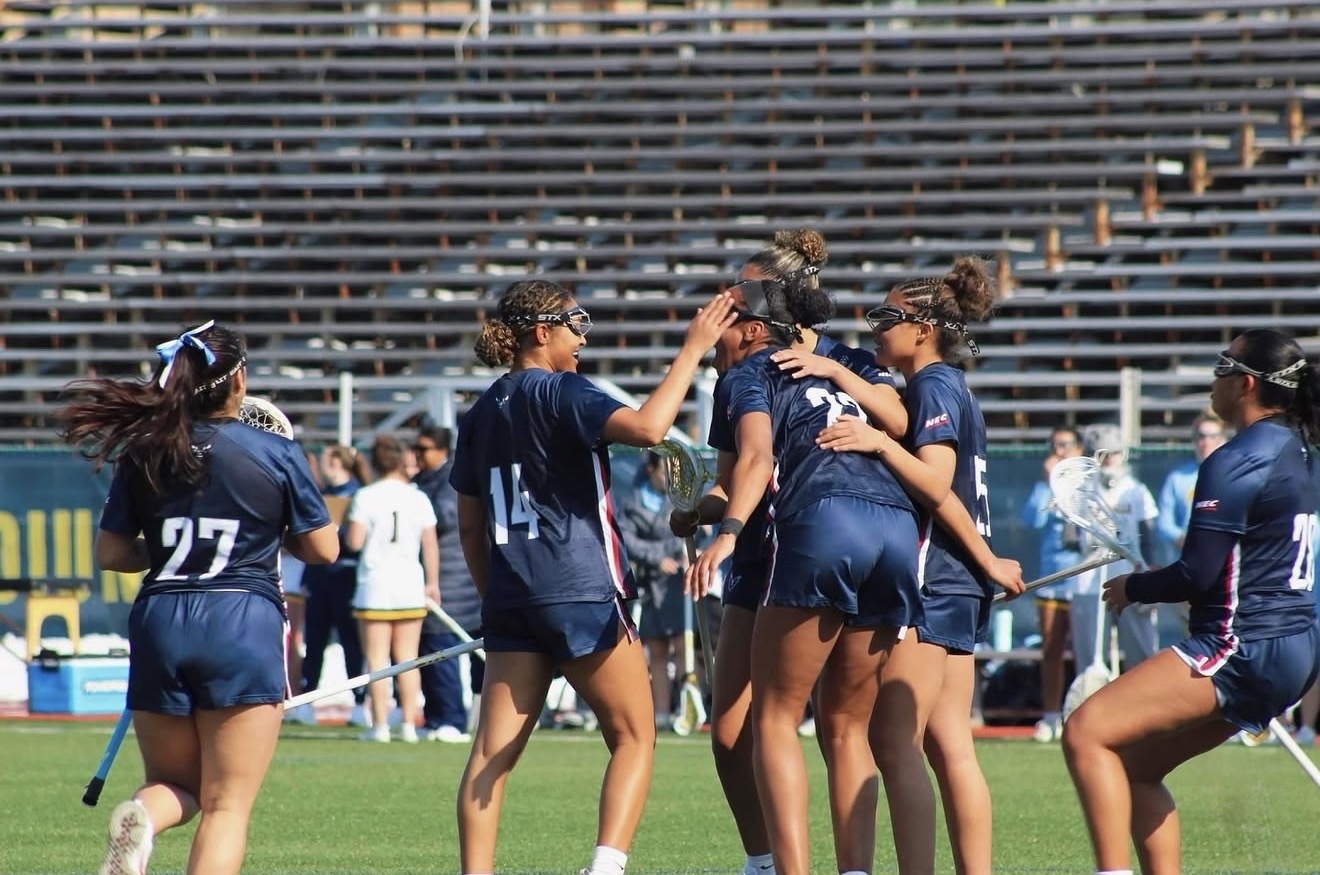
Your athletic experience belongs on your resume because it is concrete evidence of the soft skills employers cannot easily teach or verify: discipline, teamwork, leadership, resilience, and staying composed under pressure. The catch is that you have very little time to make that evidence obvious.
Start with how little time you get. Eye-tracking research from The Ladders found recruiters spend around seven seconds on a first pass through a resume. That is barely enough time to catch your name and a couple of job titles, so how you frame your sport matters a lot more than the simple fact that you played it.
Here is the part that works in your favor. The things you cannot really teach are the things you already have. LinkedIn found that 92% of hiring professionals rate soft skills as important as or more important than technical ones, and those skills, communicating under pressure, keeping teammates accountable, bouncing back from a bad week, come standard with a competitive season. It pays off down the road too. An EY and espnW study found 94% of women in C-suite roles had played sports. Plenty of employers already suspect athletes make good hires. Your job is to make it obvious on the page.
We went deeper on this in the career readiness skills student-athletes already have, which is worth a read once you have a draft going.
Where should you put athletic experience on your resume?
Put athletic experience in one of four places, depending on how much of your story it carries: its own section, inside your work experience, in your professional summary, or under awards and honors. Common section headers that work include “Athletics & Leadership,” “Leadership Experience,” “Relevant Experience,” “Activities & Leadership,” or “Intercollegiate Athletics.”
There is no single right answer. A few options, and when each one fits:
- Give it its own section. If athletics is a big part of who you are, put it under a heading like “Athletics & Leadership” or “Activities & Leadership.” This tends to work best for current students and recent grads who do not have much formal work history yet.
- Fold it into your work experience. If your role reads like a job, captain, team operations, running events, list it right alongside your other experience with the same bullet style. Someone reading top to bottom will treat it as real experience, because it was.
- Work it into your summary. A short summary at the top of the page gets read first. A line like “Former NCAA athlete with four years of team leadership” sets the tone before a recruiter reaches anything else.
- List it under awards and honors. For individual recognition that does not need full bullet points, such as All-Conference selections, a state championship, or academic all-conference honors, a short “Awards & Honors” section handles it cleanly.
Whatever you pick, list it most-recent-first and keep the formatting simple. Applicant tracking software reads your file before a person does, and it tends to choke on busy layouts. We walked through that in the 2026 résumé mindset if you want the full rundown on formatting.
Instead of writing
Four-year varsity soccer player, write this: Committed 25+ hours a week to training and competition for the Men’s Division I Soccer Team while carrying a full 15-credit course load.
Team captain, write this: Led a 30-person roster through a mid-season coaching change and kept the group ranked top three in the conference
Won the conference championship, write this: Set the daily practice standard for a unit that climbed from 8th to 1st over two seasons
Worked with the strength staff, write this: Used performance data and film review to cut sprint times by 8% across one offseason
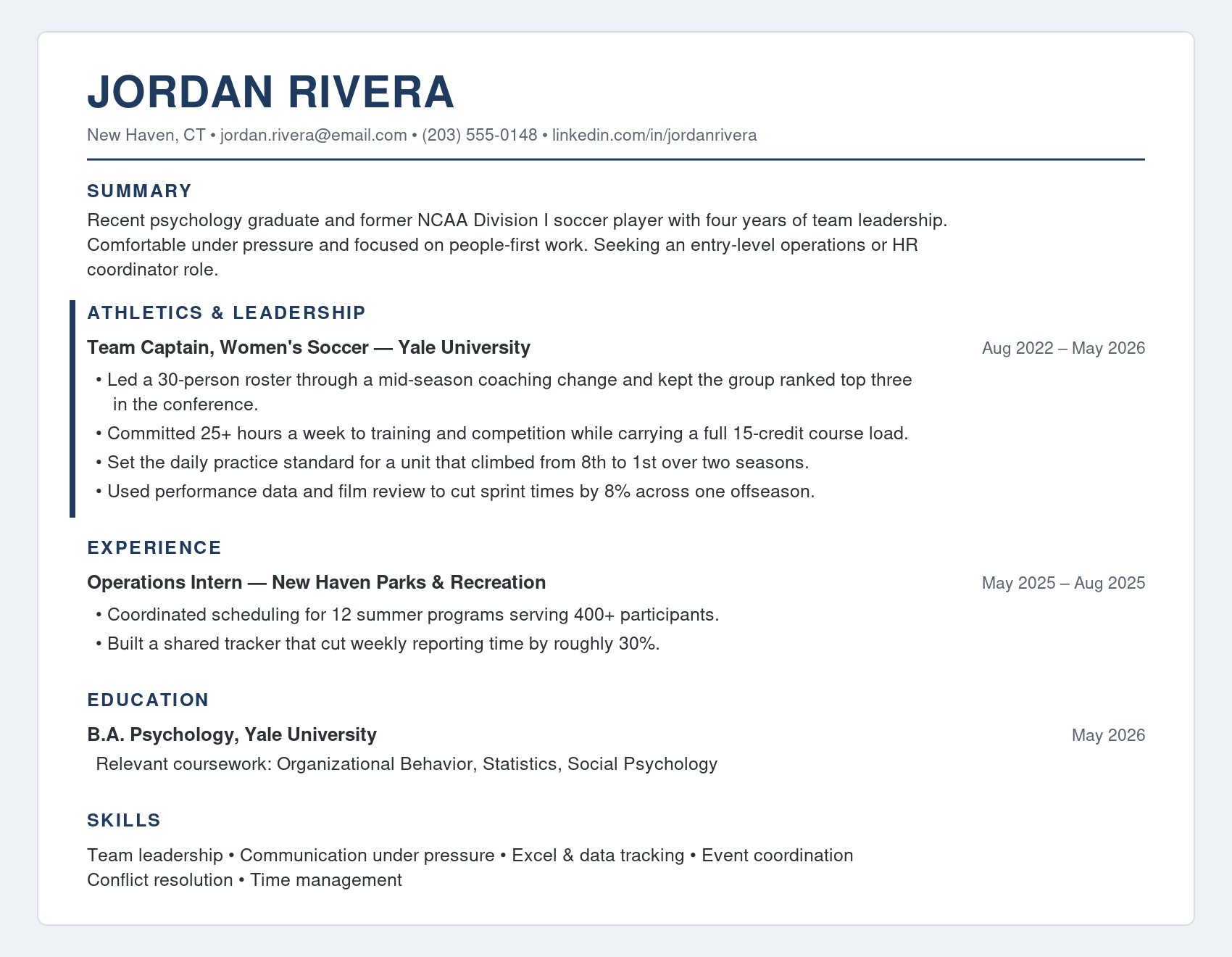
Notice that none of the “write this” versions mention a score or a stat that only means something to another athlete. They translate the experience into outcomes a business person recognizes: hours managed, people led, problems solved, numbers moved. That is the language that survives a seven-second scan. If your sport built skills you cannot quite name yet, our guide on what employers really mean by “soft skills” can help you put words to them.
What does a strong athletic entry look like on the page?
Here is how the pieces come together for a recent grad who wants athletics to carry real weight. In a dedicated section, it might read:
NCAA Division I Soccer | Varsity Player & Team Captain, 2022 to 2026
- Committed 25+ hours a week to training, competition, and travel while carrying a full 15-credit course load.
- Elected captain by coaches and teammates; led a 30-person roster through a mid-season coaching change and kept the group ranked top three in the conference.
- Set the daily practice standard for a unit that climbed from 8th to 1st over two seasons.
If you competed professionally or your sport functioned as full-time work, the same entry belongs in your main experience section, written the way you would write any other job.
What if you weren’t a starter, walked on, or got hurt?
If you were not a starter, walked on, or got hurt, write about the role you actually had. A hiring manager is not recruiting you for a roster. They want to see how you operate, and you do not need a starting spot to show that.
Honestly, walk-ons and role players have a story a lot of starters do not. You competed for your place every single day and stayed ready whether or not the minutes came. That kind of consistency reads well to an employer. And if an injury ended things early, do not treat it like a hole to explain away. Something like “rehabbed a season-ending injury while staying in game planning and mentoring younger players” tells a hiring manager plenty about how you handle a bad break. Nobody is hiring you for the trophy anyway. They are hiring for the habits underneath it, the showing up, the staying ready, the not walking away when it stopped being fun. That came through whether you started or not.
How do you talk about your athletic experience in the interview?
Your resume gets you in the room. The interview is where your athletic experience really does its job, because you can finally add the context a bullet cannot. A few things that help:
- Tell one story, and tell it well. Grab a single moment, a comeback, a call you had to make as captain, a hard conversation with a teammate, and walk them through it. One real story does more for you than a rundown of everything you ever accomplished.
- Land it on the job. Finish the story where the role starts. Something like “that is why I do well on teams that move fast and actually hold each other accountable” connects your sport to what they need.
- Ask how the team really works. You already know how much your environment shaped you as an athlete. Ask how feedback happens and what a strong first year looks like. It makes you look self-aware, and it helps you figure out whether you would even like it there.
- Go easy on the sports talk. One good metaphor sticks. Five makes it sound like sports is the only world you know. Say it in language the person across the table actually lives in.
If the “tell me about yourself” opener always trips you up, we broke that one down here, and it is usually where an athlete’s answer either lands or falls apart.
What athletic experience should you leave off?
Leave off the insider stats that only mean something to another athlete, inflated titles, and any line that does not say something about how you would do the job. A batting average or a 40 time does not land with a marketing manager. Keep your two best awards instead of listing all of them, skip the jargon, and do not puff up a role you did not really hold, because it comes apart the second someone asks a follow-up. If a line does not say something about how you would do the work, it can probably go.
You already put in a lot of work - Prospect HQ can help on what's next
Everything your sport taught you, the discipline, the leadership, the way you keep going when it gets ugly, is real experience. Written the right way, it holds up next to any internship on the page. A resume can only carry so much of a person, though, and the things employers care about most, how you come across and what actually drives you, are the ones that never fit in a bullet.
That gap is the reason we built Prospect HQ. Instead of sending applications into a void, you record a short video, let a hiring manager actually hear you, and get matched with employers who care about how you work rather than which keywords you used. If you are a current or former student-athlete trying to figure out what comes next, take a look at how Prospect HQ works for athletes and create your free profile. You put in the years. Let the right employer see them.
Frequently Asked Questions
How do I put my athletic experience on a resume if I wasn’t a starter?
Yes, if you present the skills and results rather than the fact that you played. Athletic experience is concrete evidence of leadership, time management, teamwork, and composure under pressure, which is exactly what employers say they screen for.
How do I list being a student-athlete on a resume?
List it like a job: a clear header with your sport and role, dates, and two to four bullets that lead with an action verb and end with a quantified result. Translate the experience into workplace skills instead of leaving it as game stats.
How do I put my athletic experience on a resume if I wasn’t a starter?
Write about the role you actually had. Being a walk-on or a role player shows you competed for your spot every day and stayed ready without the spotlight, which is exactly the consistency employers want. Talk about what you contributed, how you supported the team, and any leadership or improvement you drove, instead of playing time.
Is it okay to put high school sports on my resume?
As a current college student or a very recent grad, high school athletics can work if it shows real leadership or achievement and you are short on other experience. Once you have college-level sports or internships to point to, swap it out. Keep your most recent and most relevant experience at the top.
How do I talk about my sport in an interview without sounding cliché?
Use one specific story instead of general lines about “teamwork” and “hard work.” Walk through a real moment, then tie it directly to the role you are interviewing for. Stick to one sports metaphor at most, and translate the lesson into language that fits the job.
.jpg)
.jpg)