


Join our monthly newsletter where you will find interview advice, Prospect HQ updates, and more!
Share



Real Advice for Student-Athletes Starting Their Job Search (From Someone Who’s Been There)
If you’re a student-athlete starting to think about internships or life after your last season, I want to tell you something that I wish someone said to me:
You’re not behind.
You’re not unprepared.
You’re not supposed to magically know how this works.
You’ve spent years inside a system with a schedule that tells you where to be, what to do, who’s counting on you, and what the next mile marker looks like. And then suddenly you’re expected to plan your entire career off a few Google searches and a résumé you wrote at 1 a.m. between homework and a bus trip.
So let’s take the pressure down and talk honestly. This is the advice I wish I had when I was in your shoes, and the advice I’ve heard from so many former student-athletes since.
You are more qualified than you think
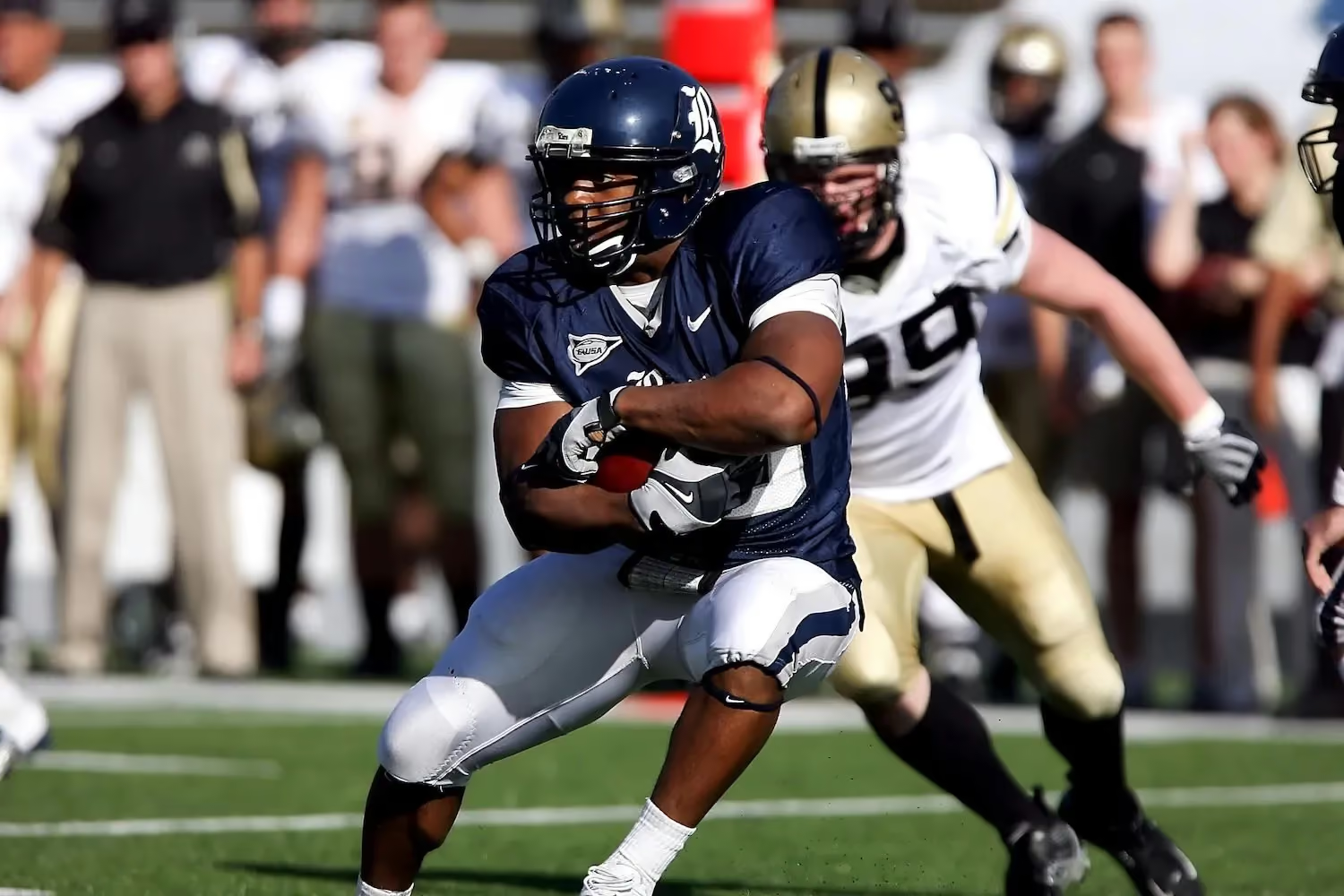
Almost every athlete I talk to says the same thing: “I don’t think I’m qualified for these jobs.”
And I get it. Corporate job descriptions make it sound like you need ten years of experience and a LinkedIn full of buzzwords just to be considered. But here’s the part nobody tells you: most early-career jobs aren’t looking for experts in the field, they’re looking for people who can communicate, handle pressure, adapt, and be a good teammate. Sound familiar?
You already do that. You’ve done that at 6 a.m. workouts when no one wanted to be there. You’ve done that in games when everything fell apart and the team needed someone to settle the energy. You’ve done that when you traveled across states, kept up with school, and still showed up ready to go.
Employers love this. They don’t always know how to put it into words, but they feel it when they talk to you.
Your resume isn’t empty, you just need to adjust the language
When I wrote my first résumé, I remember staring at the screen thinking, “Cool… so I’ve played my sport for basically my entire life, gone to practice every day, done lifts, watched film, traveled every weekend, balanced classes, and slept about six hours a night. How does any of that fit into a document with bullet points like ‘assisted cross-functional teams’ and ‘managed stakeholder expectations’? What does that even mean?”
If that’s you — breathe. Seriously. The problem isn’t that you lack experience. The problem is that no one ever taught student-athletes how to translate real experience into career language.
Think about what your weeks actually look like when you’re in-season. You wake up at 5:30 a.m., not because you want to, but because your entire team is counting on you. I remember I had to play 3 sets before my first class at 9am. It was brutal. But, I showed up.
You’re expected to train at a level that pushes your limits, then shift into being a full-time student before lunch. You manage meals around class and travel schedules, cram homework into buses or hotel rooms, keep your grades up, attend film sessions, juggle injuries, meet with trainers, and show up with focus for every single practice — even when your body is wrecked and your brain is fried.
And then someone tells you, “Sorry, we’re looking for someone with strong time-management skills.” You’re joking, right?
Time management is not something you “have.” It’s something you’ve mastered out of necessity. Same with discipline. Same with accountability. Same with communication. Same with handling pressure.
Let me put it plainly: Your average week as a student-athlete would make half the workforce cry.
But when it’s all you’ve ever known, it doesn’t feel like a résumé line. It feels normal. It feels like “just what we do.” You don’t see your own strength because you’ve lived inside it for so long.
That’s why translation matters.
Saying “Led warm-ups and coordinated team workouts” might sound small to you, but to employers, that reads as leadership, initiative, and the ability to direct a group toward a common goal.
Saying “Managed 20+ hours of training alongside a full academic course load” shows focus, time management, consistency, and prioritization.
Saying “Studied film to prepare for opponents and improve performance” reads as analysis, pattern recognition, and continuous improvement.
Saying “Communicated in high-pressure, fast-paced situations” shows clarity, composure, and teamwork — all things employers struggle to find in early-career talent.
None of that sounds like an internship, but it functions like one. In a lot of ways, it’s more intense. And here’s the part athletes don’t realize: hiring managers can feel this in you even before you say it. They can see it in the way you talk about your schedule. They pick up on your discipline without you bragging. They can tell you’re used to being relied on. They hear the difference in how you describe responsibility. They see the professionalism you’ve built without ever stepping foot into an office.
Your résumé shouldn’t hide your reality. It should reveal it. You’ve already done the hardest parts of “professionalism,” people just don’t call it that in athletics.
Once you start seeing your athletic experience through that lens, and not as something separate from your career, but as the foundation of it, your résumé stops looking empty. It starts looking like the strongest story you have.
How to treat an interview like a conversation
Interviews feel scary until you realize something that completely changes the game: it’s not a test. There’s no secret answer key. Nobody is waiting to catch you slipping. Most of the time, the person interviewing you is just trying to understand how you think, how you operate, and whether you’re someone they’d want on their team.
But I didn’t know any of that during my first interview. So, I sat there convincing myself I needed “professional examples,” even though I barely had any. So I panicked, grabbed a couple of forgettable stories from group projects I didn’t even care about, and tried to make them sound impressive. They came out stiff, over-explained, and honestly… the opposite of who I actually am.
It wasn’t until my next interview, when I dropped the act and started talking about real moments from my tennis experience, that everything shifted. I talked about a time when I had to shift my strategy based on my opponent’s style of hitting. I talked about a teammate I had to confront because our communication was off when we played doubles together. I talked about a match where everything was going wrong and I had to reset after being down a set. Suddenly the person interviewing me was leaning in, smiling, asking follow-up questions. And for the first time, I realized: this is what interviewing is supposed to feel like.
The biggest takeaway is almost every interview question is really just a prompt for a story you’ve already lived. When someone asks, “Tell me about a time you adapted quickly,” they don’t actually care where it happened. They care about how you responded. Maybe you changed positions mid-season. Or, adjusted to a new coach’s system. Played through unexpected challenges.
When someone asks, “Tell me about a mistake you made,” they’re not testing you. They’re checking how you recover, take responsibility, and learn. Think about a missed assignment, a misread in a game, a moment where you didn’t communicate clearly. You’ve lived every version of this.
When someone asks, “Tell me about a time you led,” they’re not looking for a formal title. Captains don’t have a monopoly on leadership. Maybe you were the one who stayed late to help a teammate. Maybe you were the emotional calm during chaos. Maybe you were the person who spoke up in the locker room when everyone else stayed quiet. That counts. More than you know.
Once you stop thinking of interviews as tests, and start seeing them as conversations about moments you’ve already gone through, everything gets easier. Your shoulders drop. Your voice relaxes. You stop sounding rehearsed. You stop trying to be someone “more professional,” and start showing the person you already are: someone who has handled pressure, solved problems, worked with different personalities, and stayed accountable when it mattered.
You’re not making anything up. You’re not performing. You’re just connecting the dots between your lived experience and the questions in front of you.
And here’s the best part: athletic stories aren’t just acceptable, they’re memorable. They show who you are without forcing you to pretend.
Networking as a student-athlete
-min-min.avif)
As a student-athlete, you already have a built-in network. Think about it. Teammates. Alumni. Former competitors. Coaches who’ve watched you grow for years. People who understand your work ethic without needing an explanation. The challenge isn’t creating a network — it’s actually using the one you already have.
That’s why Prospect HQ is such a powerful tool. It puts your whole athletic community in one place. You can connect with alumni, discover stories from athletes who’ve already been through the transition, send intro videos to employers, and get seen in ways a cold LinkedIn message simply can’t. Prospect turns networking into something that feels natural, as if you’re just talking to people who get you.
Most athletes underestimate how far a thoughtful message can go. And no, “I’m exploring job paths” doesn’t move the needle anymore. You have to get specific, show genuine interest, and make it easy for someone to want to respond. A few examples that actually open doors:
Reaching out to an alum:
“Hey [alum], I saw on Prospect HQ that you also played soccer at BC. I’d love to hear what surprised you most when you transitioned out of sports and started in consulting. I’m preparing for my next step after college, and connecting with alum who understand what that’s like. Are you open for a quick conversation?”
Messaging someone in your conference you played against:
“Hey [person], we played against each other in the American League. I saw your videos about breaking into marketing, and it resonated with me. I’m trying to understand what entry-level roles actually look like, and how I can talk about my skills as an athlete. Would you be willing to share what your first few months were like?”
Reaching out to someone in an industry you’re interested in:
“Hi [person in industry], I came across your profile on Prospect and noticed you moved from D1 volleyball into product management. I’m curious how you figured out this was the right path. If you have time, I’d love to hear what helped you make that decision.”
Following up with someone who posted meaningful information:
“Hey [content creator] your video about rebuilding identity after athletics really resonated with me. I’m a senior going through some of the same challenges. If you’re open to it, I’d love to hear more about how you navigated that phase.”
These messages work because they’re real, specific, and rooted in shared experience, which is exactly where student-athletes thrive. Networking isn’t about having a perfect résumé. It’s about connection. It’s about curiosity. And it’s about showing up as yourself. Prospect HQ makes that possible at scale because it brings your community into view and gives you easy ways to start conversations that lead somewhere real.
How to figure out what industry interests you
One of the hardest parts of starting your job search is the pressure to already know what you want. Most student-athletes think everyone else has it figured out, when in reality almost nobody does. Job titles sound vague. Career paths feel abstract. And you are suddenly expected to choose a direction that will shape the next few years of your life.
Here’s the truth: you don’t find clarity by sitting in your dorm Googling “best jobs for recent grads.” You find clarity by paying attention to what interests you. What are you passionate about? What brings you joy? You can find it by talking to people, hearing their stories, and noticing what sparks something in you.
You can start with a simple question: What have I enjoyed in the past that didn’t feel like work?
Maybe you loved mentoring younger teammates. Maybe you liked analyzing opponents and figuring out strategies. Maybe you were the organized one who kept everyone on schedule. Maybe you liked creating content for your team’s social media. Maybe you enjoyed helping your coach break down film. These small things often point toward roles you would enjoy far more than you realize.
You can also learn a lot by talking to people a few years ahead of you. Ask them what their job actually looks like each day. Ask them what surprised them. Ask them what skills ended up mattering more than they expected. Most people are happy to share, and those conversations often uncover career paths you didn’t even know existed.
No one picks the perfect job on the first try. Most people pivot. Most people sample different paths and figure it out as they go. You’re not choosing a forever identity. You’re choosing a starting point.
Think of it less like picking a career and more like following your curiosity. When something pulls you in, pay attention. When something feels boring or draining, that’s information too. You’re allowed to adjust. You’re allowed to explore. You’re allowed to build a career the same way you built confidence in your sport: through reps, feedback, and learning as you go. You just need a starting direction and the willingness to keep learning.
How to talk about your strengths without feeling cringey
Every student-athlete knows the feeling. Someone asks, “So what are your strengths?” and your entire brain leaves your body. You either freeze, ramble, or say something vague like “I’m a hard worker,” which tells them nothing and feels terrible to say.
Talking about yourself is awkward for almost everyone. Especially athletes. You are trained to be humble. You are trained to think about the team. You are trained to act like the work you put in is normal, even when it isn’t.
Here’s the mindset shift that helps everything click: You’re not bragging. You’re giving people the information they need to understand you.
Think about how you talk to a coach during film. You don’t say “I’m amazing at defense.” You say “Here’s how I read this play.” You describe your process. You explain how you think. You talk about moments, not adjectives. That is exactly how you should talk about your strengths in a job search.
You don’t need to “sell yourself.” You just need to tell the truth in a way that helps someone see how you operate.
Here are a few examples of how to shift from cringey to confident:
Instead of: “I’m a leader on the team.”
Try: “A lot of my leadership came from helping younger teammates settle into the team and gaining their confidence during high pressure moments.”
Instead of: “I work hard.”
Try: “During the season, I was managing early morning lifts, classes, travel, and matches, so I learned how to stay organized and follow through even when the schedule was intense.”
Instead of: “I’m good under pressure.”
Try: “I’m used to making decisions quickly in stressful situations, so I’ve learned how to stay focused and communicate clearly when things get chaotic.”
Instead of: “I’m a team player.”
Try: “I’m used to working with a lot of different personalities, and I got pretty good at adjusting my communication style to keep the team moving in the same direction.”
These slight adjustments in tone are simply putting real experiences into clear language. The key is to talk about behaviors, not labels. Anyone can say they are “driven,” but you can say what being driven actually looked like for you. Anyone can claim they are “reliable,” but you can talk about what reliability required from you. When you do that, people understand not just what you are good at, but how you show up.
The goal is to sound like yourself, but with some additional context. You are giving people a window into how you think, how you work, and how you respond to challenges. That is what employers care about most.
And here is the part athletes never realize: the more specific you are, the more confident you sound. Confidence is all about clarity, and being able to point to real experiences and say, “This is how I learned that skill” or “This is how I know I can handle that situation.”
Realistic first steps to take in your job search
The beginning is always the hardest part. Not because you are unprepared, but because the job search feels huge and vague and full of invisible rules no one explains. Most athletes stall right here. They think they need a perfect résumé, a fully mapped career path, or some kind of polished plan before they can do anything at all.
Step 1: Pick one or two areas you’re curious about
I recommend searching for things with a mindset of “what seems interesting right now.” Curiosity is enough. You can adjust later. You are allowed to explore.
Step 2: Talk to real people who work in those areas
This is really where those networking skills, and Prospect HQ, will come in handy for you. You’d be surprised with how productive one short conversation can be, instead of searching for hours online.
Step 3: Make a résumé that reflects your athletic reality
Your résumé should tell the truth about what you’ve done, what it required, and how it shaped you. You already wrote the building blocks in the sections above. Translate your experience, and your résumé will take shape quickly.
Step 4: Create a simple introduction you can use anywhere
You may have heard of an elevator pitch. That’s exactly what we’re talking about here. Don’t be too overwhelmed by the idea of an elevator pitch. It’s really just a way to introduce yourself. You can share your major, your sport, your interests, and what you’re exploring. You’ll use it in messages, interviews, career fairs, or anytime someone asks, “So tell me about yourself.” Think of it as your warm up. It’s there to help you settle in, and start the conversation.
Step 5: Apply intentionally, not endlessly
Ten thoughtful applications are better than one hundred rushed ones. You don’t need to mass apply to everything… despite what the news and AI companies are telling you. Pick roles that genuinely interest you, tailor your approach, and show up prepared. Quality beats volume every time.
Step 6: Treat the process like reps
Your first message might feel awkward. Your first résumé might feel off. Your first interview might feel shaky. That is normal. You’re not supposed to get everything right on day one. You improve through repetition, reflection, and small adjustments. It’s the same way you improved in your sport.
Step 7: Stay connected to people, not just postings
Most opportunities come from conversations, curiosity, and timing. That is why reaching out matters more than scrolling. Your network is already much larger than you think, and most of the people in it want to help you find your footing.
You’re More Ready Than You Think

If you’ve made it this far, I hope you hear this clearly: you are not behind. You are not missing something everyone else magically figured out. You are a student-athlete trying to build a future while balancing a life most people could not handle for a single week. The fact that you are even thinking about what comes next already says a lot about who you are.
I know this phase can feel confusing. I remember that pressure. I remember wondering if I was doing it “right,” or if everyone else had some secret playbook I never got. But you don’t need a perfect plan. You don’t need to know your whole career path. You only need a direction, a little curiosity, and the willingness to take small steps forward.
Everything you’ve done up to this point has prepared you more than you realize. The discipline, the resilience, the early mornings, the late nights, the setbacks you pushed through, the teammates you supported, the moments where you had to center yourself and keep going. All of that lives in you. All of that comes with you.
The job search isn’t about becoming someone different. It’s about learning how to talk about the person you already are.
So take one step. Reach out to one person. Explore one path that feels interesting. Try something, learn something, adjust, and try again. That is how you built yourself as an athlete, and it is the exact same way you will build your career.
And if no one has told you this yet, let me be the one: you are capable. You are prepared. You have options. You do not have to figure this out alone. The transition is real, but so is your strength.
This next chapter isn’t something to fear. It’s something to grow into. And you’re more ready than you think.
If anything in this resonated with you and you want to talk about your own path, connect with me on LinkedIn or send me a message on Prospect HQ. I’m here to help however I can.
.jpg)
.jpg)